
Impacted Teeth Treatment in Clinton, TN
An impacted tooth is a permanent tooth that does not erupt into its normal position in the mouth. Instead, it may remain trapped beneath the gum tissue or bone because another tooth, extra tooth, lack of space, or another condition is blocking its path.
At Anderson Oral & Maxillofacial Surgery in Clinton, TN, Dr. James Gregory Anderson provides evaluation and surgical treatment for impacted teeth, including impacted canine teeth. When possible, the goal is to preserve the natural tooth and help it erupt into a healthy, functional position.
What Is an Impacted Tooth?
Impacted teeth can occur in either the upper or lower jaw. Wisdom teeth are commonly impacted, but the upper canine teeth, also called eyeteeth or cuspids, are another type of tooth that frequently becomes impacted.
Canine teeth are important to your oral health and smile. They have long roots and help guide the movement of your upper and lower teeth when you bite and chew. Because of their function and location, your dentist or orthodontist may recommend treatment to help an impacted canine erupt rather than removing it.
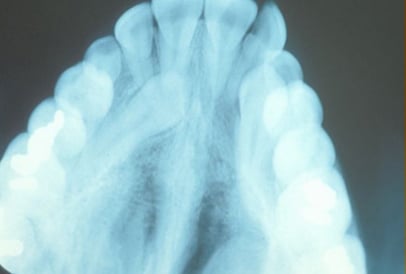
An impacted tooth may be located beneath the gum tissue, within the jawbone, behind other teeth, or in an abnormal position. A dental examination and X-rays can help determine the location of the tooth and whether treatment is necessary.
Why Do Teeth Become Impacted?
There are several reasons a permanent tooth may become impacted. Common causes include:
- Not enough room for the tooth to erupt normally
- A baby tooth that remains in place and blocks the permanent tooth
- An extra tooth, also called a supernumerary tooth
- Abnormal positioning or development of the permanent tooth
- Cysts or other growths that interfere with eruption
- Other dental or developmental factors
Your dentist or orthodontist may discover an impacted tooth during a routine examination or X-ray, even if it is not causing pain. If additional evaluation or surgical treatment is recommended, you may be referred to an oral and maxillofacial surgeon in Clinton, TN.
Early Evaluation of an Impacted Canine Can Be Important
Upper canine teeth typically erupt during the early teenage years. If a permanent canine does not erupt as expected, your child’s dentist or orthodontist may recommend an examination and imaging to determine whether the tooth is impacted.
Early evaluation can help identify an impacted canine before it causes problems with neighboring teeth or becomes more difficult to move. However, there is no single age or treatment approach that applies to every patient. The position and development of the tooth, available space, surrounding teeth, and overall oral health all play a role in treatment planning.
A panoramic X-ray can help show the location of developing and impacted teeth. In some cases, additional 3D imaging may be recommended to provide a more detailed view of the impacted tooth and its relationship to nearby tooth roots and other structures.
If your child has an impacted canine, Dr. Anderson can work with your dentist or orthodontist to determine whether surgical exposure and orthodontic treatment may help bring the natural tooth into position.
How Are Impacted Canine Teeth Treated?
When an impacted canine does not erupt on its own, treatment often involves a combination of orthodontic treatment and oral surgery. Your orthodontist first creates or maintains enough space for the tooth. The oral surgeon can then expose the impacted tooth and attach a small orthodontic bracket or attachment.
After the surgical procedure, your orthodontist uses gentle orthodontic forces to gradually guide the tooth into its proper position.
The goal of impacted canine treatment is to save the natural tooth whenever possible. Because every impacted tooth is different, Dr. Anderson will evaluate its location and development before recommending a treatment plan.
Exposure and Bracketing of an Impacted Tooth
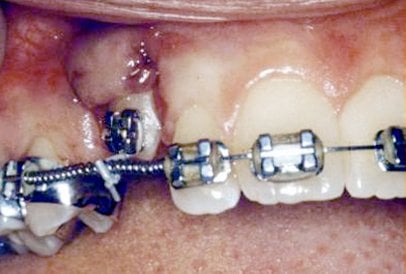
Exposure and bracketing of an impacted tooth is a minor oral surgery procedure that uncovers a tooth trapped beneath the gum or bone and allows your orthodontist to guide it into the dental arch.
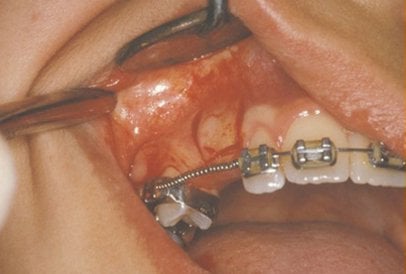
During the procedure, Dr. Anderson makes a small opening in the gum tissue to locate the impacted tooth. Depending on its position, a small amount of bone may also need to be removed to expose the tooth.
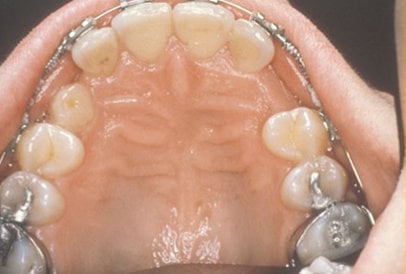
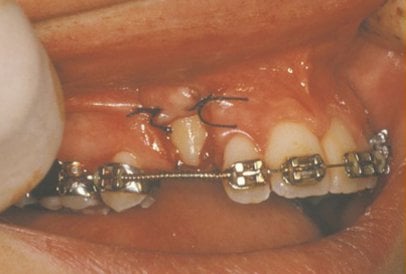
Once the tooth is accessible, a small orthodontic bracket or attachment can be bonded to its surface. A chain or similar attachment may then be connected to the bracket so the orthodontist can gradually guide the tooth into position.
In some cases, the tooth may only need to be exposed without placement of an orthodontic bracket. Dr. Anderson will discuss the recommended approach with you during your consultation.
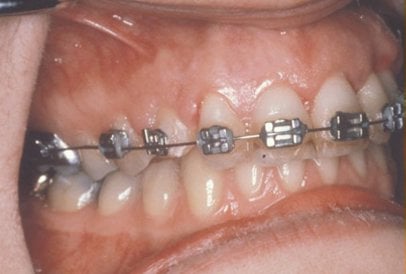
Exposure and Bracketing of an Impacted Cuspid
What to Expect During Impacted Tooth Surgery
Impacted tooth exposure and bracketing is performed in the comfortable setting of our oral surgery office in Clinton, TN. The anesthesia or sedation used will depend on the patient’s age, health, treatment needs, and comfort level.
Many patients can have the procedure performed using local anesthesia and nitrous oxide. IV sedation may also be an option for appropriate patients who would prefer to be more relaxed or asleep during surgery.
The length of the procedure depends on the location of the impacted tooth and whether it needs to be exposed and bracketed or simply exposed. Dr. Anderson will review the procedure, anesthesia options, and what to expect during your consultation.
For information about preparing for anesthesia, please see our Preoperative Instructions.
What Happens After an Impacted Tooth Is Exposed?
After the impacted tooth has been exposed and an orthodontic attachment has been placed, your orthodontist will begin gradually guiding the tooth into the dental arch. This process takes time because the tooth needs to move safely through the surrounding bone and gum tissue.
Your orthodontist and oral surgeon will monitor the tooth throughout treatment. Once the tooth reaches its proper position, the surrounding gum tissue may also be evaluated. Some patients may need additional gum treatment to create a healthy and natural-looking gum contour around the tooth.
For detailed information about caring for your mouth after surgery, see our After Impacted Tooth Exposure instructions.
Can an Impacted Tooth Be Saved?
In many cases, an impacted canine can be preserved and guided into its proper position. However, not every impacted tooth can be successfully moved into the dental arch.
Treatment recommendations depend on factors such as the tooth’s location and angle, available space, stage of development, relationship to neighboring teeth, and the condition of the surrounding bone and gum tissue.
If an impacted tooth cannot be moved safely into position, Dr. Anderson will discuss other treatment options with you. Depending on the individual situation, these may include removal of the impacted tooth and consideration of a restorative replacement.
Frequently Asked Questions About Impacted Teeth
What is an impacted canine?
An impacted canine is a permanent canine tooth that has become trapped beneath the gum or bone and cannot erupt into its normal position. Upper canine teeth are among the most common non-wisdom teeth to become impacted.
When should an impacted canine be evaluated?
Upper canine teeth generally erupt during the early teenage years. If a canine does not appear to be erupting normally, your dentist or orthodontist may recommend an examination and X-ray. Early evaluation can help identify the tooth’s position and determine whether treatment may be appropriate.
What is impacted tooth exposure and bracketing?
Exposure and bracketing is an oral surgery procedure used to uncover an impacted tooth and attach a small orthodontic bracket or attachment. The orthodontist can then use the attachment to gradually guide the tooth into the dental arch.
Does impacted tooth surgery hurt?
Local anesthesia and, when appropriate, sedation are used to keep patients comfortable during the procedure. Some soreness, swelling, or sensitivity may occur after surgery. Your oral surgeon will provide specific postoperative instructions to help support a comfortable recovery.
How long does it take for an impacted canine to move into position?
The amount of time varies based on the patient’s individual circumstances. Once the tooth has been exposed, the orthodontist gradually guides it into position. Your orthodontist can provide a more specific estimate based on your treatment plan.
Will an impacted canine always need surgery?
Not necessarily. Some impacted teeth may erupt after adequate space is created, while others require surgical exposure and orthodontic treatment. Your dentist or orthodontist can determine whether an oral surgery consultation is appropriate based on your child’s development and imaging.
Who performs impacted tooth exposure in Clinton, TN?
Impacted tooth exposure is typically performed by an oral and maxillofacial surgeon in coordination with an orthodontist. At Anderson Oral & Maxillofacial Surgery in Clinton, Dr. James Gregory Anderson provides surgical care for patients with impacted teeth and other oral and maxillofacial conditions.
Impacted Teeth Treatment in Clinton, TN
If your dentist or orthodontist has identified an impacted tooth, an evaluation with an experienced oral surgeon in Clinton, TN can help you understand your treatment options. Anderson Oral & Maxillofacial Surgery works with patients, parents, dentists, and orthodontists to develop individualized treatment plans designed to preserve healthy natural teeth whenever possible.
Dr. Anderson and his team provide oral surgery in a comfortable office setting at 175 Frank Price Boulevard in Clinton, TN. To schedule an evaluation for an impacted tooth or learn more about exposure and bracketing, call Anderson Oral & Maxillofacial Surgery Phone Number 865-622-4959.